.png)
3 Reasons to Align Your Curriculum Approval Process With Your Catalog Publication Cycle
Misaligned curriculum and catalog timelines cause delays, gaps, and student confusion. Here are 3 reasons alignment matters, and what's at stake.



"We really want our faculty to represent and mirror what our student body looks like." While many in higher ed have recently avoided making these types of commitments, Dr. Tomicka Wagstaff, Vice President for Justice, Equity, Belonging and Identity at the College of the Holy Cross, leans into her institution's Jesuit identity and mission to turn conviction into practice. In a recent interview with AcOps Wagstaff shared Holy Cross’s commitment to inclusion and belonging is grounded in a centuries-old religious tradition. . She explains that "we really lead with our mission, which calls us to have the spirit and care for the whole person.”
After four and a half years at Holy Cross, Dr. Wagstaff’s work has expanded to include faculty hiring, curriculum design, and student advocacy. She treats each as an equally vital piece of a whole-campus belonging strategy. From a pipeline program that brings diverse doctoral candidates to campus for four immersive days, to student-led efforts that have created entirely new academic departments, her work is a case study in what it looks like when belonging is treated as an institutional responsibility rather than a series of disconnected initiatives.
The Future Faculty Institute (FFI) is a four-day immersive program that brings newly minted PhDs and advanced doctoral candidates from diverse backgrounds to the Holy Cross campus. Participants engage with faculty from their own discipline and others, meet with students and staff, explore Worcester, and work through the professional building blocks of an academic job search, from CV reviews to job talks. The FFI aims to increase visibility and showcase what Holy Cross has to offer. "Before I came to Holy Cross, I had never heard of it," she says. "There are a lot of people who shy away from looking at us simply because it says Holy Cross." The FFI is designed to close that gap, giving a range of doctoral candidates a real experience of what life at a Jesuit, Catholic liberal arts institution looks and feels like.
The institution is deliberate about keeping cohort sizes manageable, around 15 people, to maintain the program's relational value. Participants form mentoring pods within the cohort and stay connected through virtual workshops throughout the year. Reflecting on the value of the FFI, Wagstaff said, “Some of the people who come for the Future Faculty Institute may not end up at Holy Cross. They may end up someplace else, but they will have had an experience with us, they will have learned some things, and that's part of what we're trying to do, to help diversify academia in general.”
When Dr. Wagstaff made the internal case for the FFI, she did not point to peer institutions. She pointed to RIT, Virginia Tech, and Johns Hopkins. The argument was straightforward: if larger research universities with different missions can run a program like this, why can’t we run our own version of it too? For institutions thinking about replicating something similar, Wagstaff's advice is to start regional, start small, and frame it as an opportunity to expose candidates to your institution rather than the other way around. For institutions that don't have a large faculty recruitment budget, even a stripped-down version where candidates drive in just for the day can help improve faculty representation.
Faculty representation is only one piece of Holy Cross's belonging strategy. Targeted programs aim to ensure students who arrive on campus stay and thrive. For example, Holy Cross is piloting a new program called “The Brotherhood” that targets a specific and well-documented vulnerability: the sophomore drop-off for male-identifying second-year students.
College dropout rates are 20% higher for male students than female students. And more broadly, roughly one in four first-time students do not make it to a third fall semester, with the steepest drop-off often occurring after the highly structured, resource-rich first year, when early-alert systems, orientation programs, and mandatory advising taper off.
Dr. Wagstaff explains: "They are inundated with support and programs their first year, and then you think 'They know what they're doing, we can take a step back' and some of those students aren't successful, because they still need those supports in place." The Brotherhood is designed to fill that gap, pairing second-year male-identifying students with faculty and staff mentors who help them persist into their next year. The program will also take students beyond campus, with an upcoming immersion experience in Peru centered on community engagement and social justice work. The program reflects a guiding principle: showing up for students just once is not enough.
At Holy Cross, leaders do not collect student voice once a year through a survey and file it away. Dr. Wagstaff's division runs regular town halls and a community conversation series where students can speak directly about what they want to see changed. "The students really are the voice that matters the most," Wagstaff says. "We can inform and we can provide, but when the students really come together and have a voice and a need, that's when we see things happen."
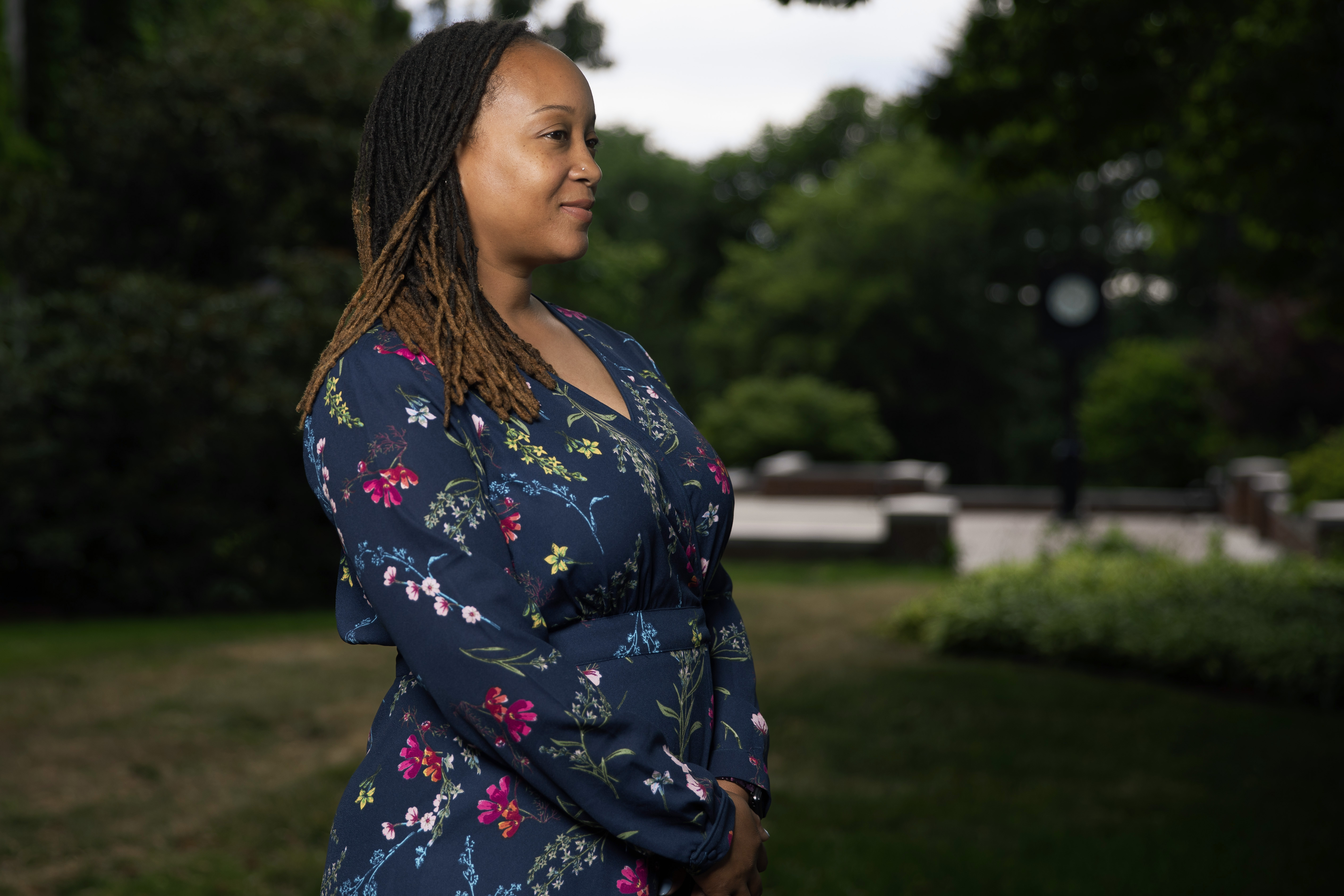
Creating forums is only one piece of the puzzle. Dr. Wagstaff's division also focuses on helping students become effective advocates for themselves, teaching them how to articulate their needs, engage with faculty governance, and bring their concerns to the correct audiences. As a result of fostering student advocacy, Holy Cross curriculum now reflects student input. Student demand helped drive the creation of a formal critical race and ethnic studies department and new programming around environmental justice. In each case, students followed a similar path. Students identified a gap, found their forum, and pushed for institutional change.
Dr. Wagstaff is deliberate about keeping those pathways open and consistent. "Our division does town halls, and we also do community conversations," she says, "where students are able to come and talk to us about what they want to see done differently." When students have consistent, structured access to decision-makers, feedback stops being a checkbox and starts shaping the institution.
Unlike larger institutions with fully staffed offices, Dr. Wagstaff did not arrive at Holy Cross with a division, initially arriving as an office of one. Four and a half years later, her expanded team oversees faculty hiring support, student retention programs, curriculum inclusion work, and community partnerships across Worcester. That growth did not happen through a single sweeping initiative. It came through pilots, feedback loops, and a consistent willingness to start small and build.
For institutions looking to replicate Holy Cross initiatives, a pilot is a great starting point. "Let's just do a pilot," Wagstaff says. "If it works, great. If it doesn't work, we really haven't lost anything." This framing has guided everything from the Future Faculty Institute to The Brotherhood, allowing her division to test ideas, gather feedback, and grow programs incrementally rather than waiting for perfect conditions, large budgets, or full institutional buy-in.
Belonging work does not have to begin with a large-scale initiative. A regional version of the FFI, a new community conversation series, a mentorship cohort of 10 students: any of these can be a starting point. What matters is that the work begins, students are included in the conversation, and the right data is collected to inform next steps.
.svg)

.png)