.png)
3 Reasons to Align Your Curriculum Approval Process With Your Catalog Publication Cycle
Misaligned curriculum and catalog timelines cause delays, gaps, and student confusion. Here are 3 reasons alignment matters, and what's at stake.

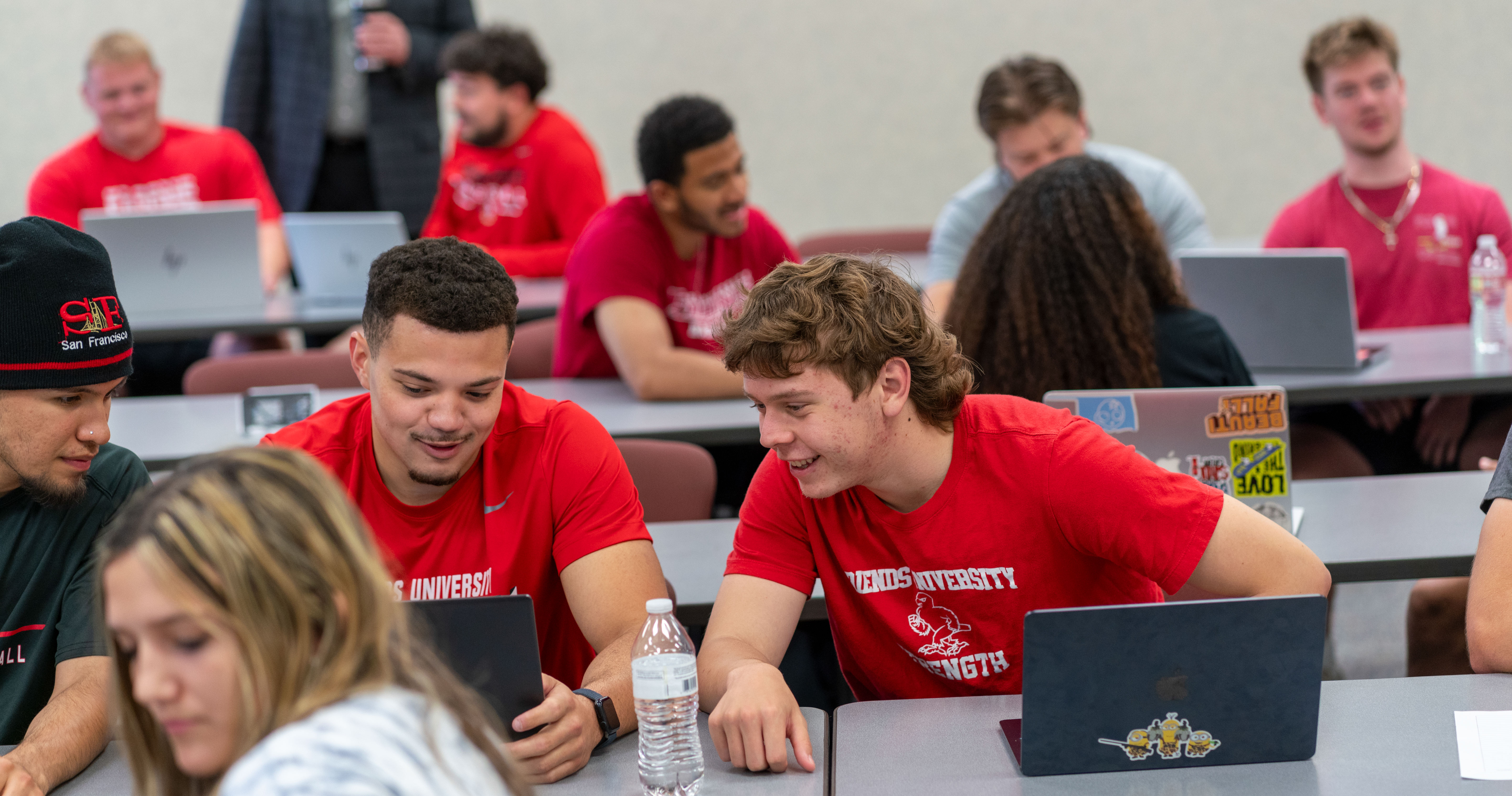

With all of the recent focus on college serving as a stepping stone to the workforce, it’s easy to forget that students aren’t a monolith. While learning the right skills and getting a good job is still a top priority, many students still place a strong value on other experiences higher ed has to offer. Small, private institutions across the US exemplify this with enrollment often dominated by student-athletes. While this is a key enrollment strategy for many institutions, getting student-athletes in the door isn’t enough. For Friends University in Wichita, Kansas, they know that recruitment is just the first step.
Dr. Brent Yoder, Associate Provost at Friends University, sat down with AcOps to discuss how the institution recently overhauled its support systems and policies to better support the student-athlete population. For Yoder and the cabinet, the initiative was rooted in a commitment to the student journey. "We didn't want to recruit students to come here unless we were able to support them in and out of the classroom," he explained. To make this commitment a reality, the institution’s Athletic Director formed a task force that brought together coaches and faculty to take a closer look at how re-engineering student support and policies could close retention gaps.
When the Athletic Director first proposed a task force to examine student-athlete performance, the original impetus was a sense that the existing mandatory study hall, a six-hour weekly requirement, was not delivering the desired results. However, rather than entering the first meeting with a fixed agenda, Yoder utilized facilitation tactics he learned through the Kansas Leadership Center to allow concerns to surface organically. By starting with a "blank whiteboard" approach, the group, composed of three coaches and three faculty members, started by naming their specific concerns and goals before diving into proposed changes.
Yoder recognized that for any operational shift to succeed, it required the buy-in of those on the front lines of student interaction.
“Just because the athletic director gave us a mandate of what he thinks is important and what he thinks the goals are, I wanted to make sure that I heard from everybody in the room about what they think is important. If we just jumped straight to, ‘here's the problem that our athletic director thinks we have,’ I was worried they would get off track."
This intentional approach enabled the committee to identify and address issues that were not in the original mandate.
One of the task force’s primary breakthroughs came from a deep dive into institutional data. The Director of Institutional Research provided data sets comparing incoming high school GPAs and standardized test scores with college performance. While this data isn’t a perfect predictor, this allowed the team to move away from anecdotal stories and toward a predictive model for support structures.
“Everybody brings in their own stories, their own ideas, their own anecdotes. I'm a data person. I want to use data to inform what we're doing. Sometimes you go in with this mindset of ‘I think this is our problem’ and then when you look at the data, you realize, actually, that's not the problem that I thought we had. Then you can dig in deeper to find out what is really going on.”
As a result of this approach, the task force discovered that the previous "one-size-fits-all" study hall requirement both burdened high achievers and failed to provide enough structure for students most at risk. The resulting recommendation was a tiered system that respected student autonomy while intensifying support where it was most needed. High-achieving students with a specified minimum GPA had their requirements reduced to three hours, ensuring they remained in the study hall environment as peer role models without feeling penalized for their success. “We didn't want to excuse them entirely, because we thought it was really important to not just have study hall be a place where only the low-achieving students are,” Yoder explained
Conversely, students admitted on probation or appeal were transitioned into a high-touch mentorship model involving graduate assistants who help students plan their weekly assignments and manage their time effectively. This individualized coaching helps students see beyond assignments due the next day and address other common time management misconceptions.
Beyond determining who should attend study hall and for how long, the IR team also helped make recommendations about which metrics were effective predictors of student-athlete retention. The Athletic Director originally suggested that all teams have a team GPA of at least 3.25. However, Yoder and the task force wanted to examine whether that was the right metric. “We were curious to see is that really a valuable metric that we should be pursuing, or were there other metrics that we wanted to look at, such as median GPA on a team, rather than the mean GPA?” Yoder noted.
After targeted data analysis and discussion, the institution moved away from focusing solely on mean team GPAs, instead targeting a reduction in the percentage of students falling below a 2.0. This change shifted the focus to the students most at risk of non-retention.
At a foundational level, the task force realized that the physical presence of a study hall in a library did not necessarily equate to academic progress. Surveys revealed that many students felt study hall was an ineffective resource. To combat this, Yoder and his team integrated the campus tutoring center directly into the study hall policy. “If they [students] went to work with a tutor one-on-one during their study hall time, or if they were in a group study session at that time, then their hours counted time and a half," he explained. By offering this incentive, the university successfully incentivized students to seek professional help at the Academic Resource Center rather than merely attempting to manage coursework in isolation.
Infrastructure also played a critical role in this shift. Recognizing that many students lacked the hardware necessary to complete assignments during study hall hours, the university secured grant funding for a dedicated fleet of laptops. This ensured that mandated study time could be productive for all students, not just those with the right resources.
One of the more surprising recommendations from the task force centered on faculty and coach communication. Both faculty and coaches communicated through students; however, the message wasn’t always accurate and both parties had no way to verify student claims.
To prevent mixed messages, Yoder explained that the task force set out to "lay out some expectations for how coaches and faculty communicate with each other. Make sure that when it comes to policies that relate to student-athletes and how they balance their athletic responsibilities with their academic responsibilities, that each side of the house understands that we have the same expectations."
To achieve this, the university updated the student-athlete handbook with policies that outlined study hall and class attendance expectations. For example, policies clarified the boundaries between practice and class. The university reinforced a strict policy: from 8:00 a.m. to 3:00 p.m., academic responsibilities take absolute priority unless there is a scheduled game or match. Optional workouts or trainer visits are not valid excuses for missing class. This policy alignment ensures that the students, faculty, and coaches know exactly where they stand, regardless of who they are speaking to.
While the task force’s recommendations have only been implemented for a year, the impact of these operational refinements has already shown positive outcomes. By the fall 2025 semester, Friends University saw the percentage of student-athletes with a GPA below 2.0 drop to approximately 9%, significantly outperforming the initial target of 15% set by the task force. Furthermore, the overall team GPA rose to a range of 3.4 to 3.45. As the university looks toward fall 2026 and beyond, the focus will remain on monitoring these trends and ensuring that the new initiatives are managed with the same collaborative, data-informed spirit that defined the task force's success.
.svg)

.png)